
Bed bugs are nocturnal, blood-feeding insects that can locate their host by heat and respiration. This plague has been growing a lot in recent years around the world. If you understand each stage, you will be able to spot an infestation at an early stage, know the reason why treatments have to be repeated, and be able to take practical action to stop bed bugs from spreading.
Bed Bug Life Cycle: Eggs, 5 Nymphal Stages, and Adults
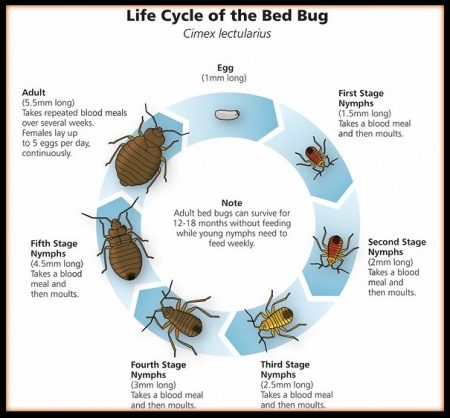
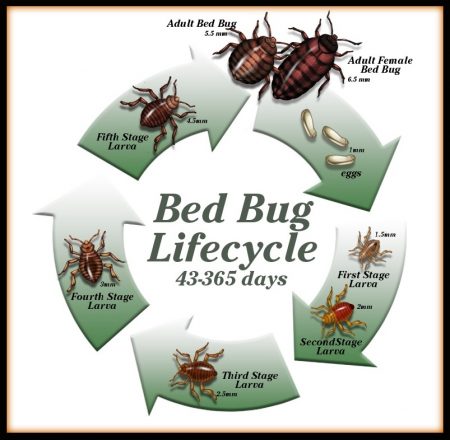
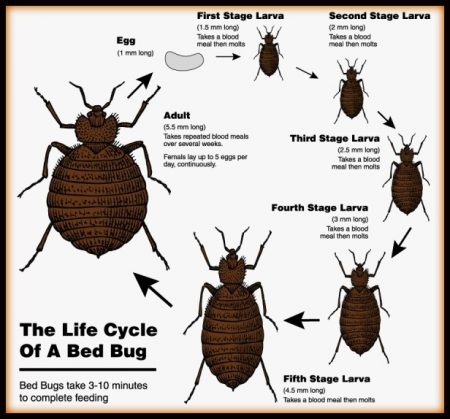
The biological cycle of bed bugs includes eggs, 5 nymphal stages (which are the immature stages before reaching adulthood), and adults. When emerging from the egg, the nymphs must feed quickly on blood; otherwise, they die in a few days, so they must find a food source to stay alive. The eggs are translucent white, and they are the size of the head of a pin.
In this pic, you can see clearly how the bed bug life cycle works.
The life cycle of bed bugs begins with mating. Bed bugs (Cimex lectularius) mate by a system known as traumatic insemination. This process consists of the perforation of the female’s abdominal cavity by the male.
Once the sperm is deposited, it goes into the circulatory fluid, the hemolymph, from where it travels to the ovaries.
Then, the female deposits small, pearl-white eggs in safe cracks and crevices. These eggs develop into nymphs, which have to feed on blood and undergo a number of molts before they become mature, reproducing adults.
Under favorable conditions, bed bugs can develop from egg to adult in about three weeks; however, they are able to survive for months without feeding, which means that hidden infestations can continue and increase even when treatment is not complete.
The complete cycle includes:
- Egg
- First through fifth nymph stages, called instars
- Unfed adult Fed
- Reproductive adult
A bed bug goes through five nymph stages before attaining adulthood, and a blood meal is generally needed for each molt.
The Egg Stage: Characteristics and Duration
Bed bug eggs are very small, measuring about 1 mm in length, and are generally referred to as pearl-white, oval in shape, and resembling a small grain of rice. Eggs that are more than five days old may have a visible eye spot.
A female bed bug lays between one and five eggs each day and may reach a total of over 500 eggs during her lifetime. The eggs are usually put in narrow spots close to where one sleeps. For example, in the seams of the mattress, in the corners of the box spring, in the joints of the headboard, and in the cracks around the furniture.
Normally, under indoor conditions, the eggs take about 6 to 10 days to hatch. Since they are very small and well concealed, eggs are one of the most difficult bed bug signs to detect without using a flashlight and carrying out a close inspection.
The Nymph Stage: Growth and Development
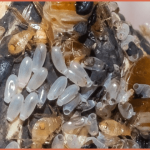
As soon as they hatch, bed bug nymphs begin to look for a blood meal; before feeding, they are translucent, whitish, or pale yellow and are hard to see with the naked eye due to their small size.
Following feeding, the nymphs turn darker and more reddish-brown; they have to take a blood meal before each moult and go through five nymphal stages before reaching adulthood. The development of a nymph generally lasts at least three weeks, although the duration can be influenced by temperature, access to food, and environmental conditions.
While nymphs are not capable of reproducing, they can bite and spread themselves through luggage, clothing, furniture, and other possessions.
The Adult Stage: Behavior and Reproduction
Adult bed bugs measure between 5 and 7 mm in length, which is about the size of an apple seed. Their bodies are flat and oval and a reddish-brown colour when they have not fed, but after taking a blood meal they become more elongated, swollen, and reddish.
Adults eat once every week and usually spend about five to ten minutes feeding. After they have fed, they go to dark and safe places where they can digest, mate, and lay eggs.
Adult bed bugs aren’t able to fly but can move quickly and are good at hiding in narrow spaces; they can also be carried on luggage, clothing, boxes, and second-hand furniture, and it is this way that infestations usually spread between houses, hotels, and workplaces.
The lifespan of a bedbug generally ranges from four to six months. To complete the molting stage, each nymph needs to feed. On the other hand, you can also determine their presence by smell, since they have a particular odor, and their fecal droppings look like black drops due to digested blood.

Factors Affecting Bed Bug Survival
Dispersion
These insects have an active and a passive way of dispersal. Regarding the active one, bed bugs walk short distances to reach their host. It can be from room to room, or even through ventilation ducts.
On the other hand, passive dispersion is what humans do with clothing, luggage, furniture, etc. Therefore, the current movements in human populations could contribute to its dispersion worldwide. Other theories about the resurgence of this problem focus on selling and purchasing second-hand furniture.
However, other factors may be influencing the spread of these insects. One of the main factors is that bed bugs have become resistant to some pesticides. This may be related to changes in pesticide application techniques in urban areas.
Another influencing factor is that bed bugs can live without feeding for even a year. They are also difficult to detect. Usually, when they are detected, there is already a certain degree of bed bug infestation.
Effective Prevention Strategies
Prevention focuses on reducing hiding places and avoiding the accidental transport of bed bugs into your home.
Inspect hotel mattresses, headboards, and luggage racks when traveling.
Keep luggage off beds and upholstered furniture.
Check seams, folds, and crevices of secondhand furniture before bringing it indoors.
Reduce clutter near beds and sleeping areas.
Use protective mattress and box-spring encasements.
Vacuum cracks, seams, baseboards, and furniture regularly.
Seal obvious cracks and crevices where bed bugs can hide.
Be cautious after travel: inspect luggage and wash clothing at high heat when appropriate.
Early detection matters because a single fertilized female can start an infestation.
Treatment Options
Controlling this pest is not an easy task, since it requires putting into practice different measures.
If you detect bed bugs in your home, you should take action immediately. You must clean and order everything inside the room. Wash clothes and sheets in hot water. You should vacuum all furniture and surfaces. Mattress and box-spring covers can trap remaining bugs and make future inspections easier.
The most used treatment to eliminate bed bugs is “dry steam” at 50°C for one minute. This treatment is effective against all stages (eggs, nymphs, and adults).
However, no measure is effective by itself; the combination and integration of treatments are essential to obtain optimal results.
If you have been dealing with bedbugs for some time without being able to eliminate them, the best thing to do is hire a pest control service.
Conclusion and Final Thoughts on Bed Bug Management
The bed bug life cycle explains why these pests are difficult to eliminate without a thorough approach. Eggs are hard to see, nymphs develop quickly after feeding, and adults can survive for months without a blood meal.
The best strategy is early detection, careful inspection, prevention, and treatment that addresses every stage of the life cycle. If you suspect an infestation, avoid spreading items between rooms and contact a licensed pest control professional for an accurate identification and a treatment plan.