

Today, bedbugs have become a complex public health problem affecting many homes in the United States. Thousands of infestations occur annually, and, worst of all, cases are on the rise. With these pictures of bed bug infestations, you can learn to recognize this pest and take action. In all the cases that we will show you, the intervention of a fumigation service has been necessary.
Pictures of Bed Bug Infestation
Pictures can help readers to understand what bed bugs and their signs might look like; close-up pictures are particularly useful for illustrating the insects’ size and shape, their eggs, the shed skins, and for helping people to spot them near usual hiding places. It is advisable to include a scale reference such as a ruler if possible.
When writing captions, describe what can be seen without drawing a diagnosis solely from the image. For example:
– An adult bed bug was photographed near the seam of a mattress.
– There can be dark spotting on the fabric; however, staining alone does not prove that bed bugs are present.
– Shed skin was found near a bed frame.
A photo might help to identify what you are seeing, but it is a pest professional who can determine whether the insect or the marks are actually caused by bed bugs.
In severe cases, it’s possible to find insects everywhere and at different stages of development, along with feces. Bedbug feces and blood stains are rust-colored and remain on your bedding when swollen bedbugs are crushed.
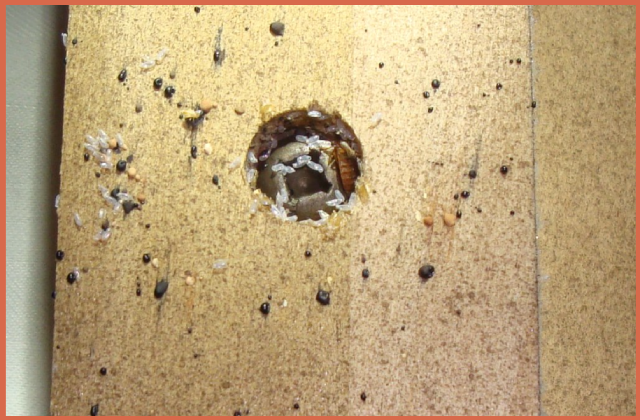
Common Signs of Bed Bug Infestation
Bedbugs can come from different places and are often brought into your home without you knowing it. Because they are flat, they can hide in any crack or crevice. Also, they’re always looking for a place that offers darkness, isolation, and protection.
During an inspection, look for more than one possible sign:
- Live bugs or tiny, pale eggs in seams and cracks.
- Shed skins left behind as young bed bugs grow.
- Dark spots that may be droppings.
- Small rusty or reddish stains on bedding, which may come from crushed bugs or blood.
These signs can be easy to mistake for something else. Bites alone do not confirm bed bugs, and neither does a single unexplained stain. If you find a suspected insect, photograph it clearly or save it in a sealed container for identification.

Waking up with bites and seeing adult forms of these insects are signs that you have bed bugs in your room. Lesions, red spots, and intense itching are symptoms of bed bug bites. If you have any indication of bedbugs in your home, feel free to do a thorough review of everything. For greater effectiveness, it is recommended to do this check-up at night with the light off and a flashlight.
Effective Methods to Combat Bed Bugs
Successful control usually takes a careful, coordinated approach rather than a single quick fix. First, confirm the pest and inspect the affected areas. Reduce clutter, clean and vacuum carefully, and follow appropriate laundering or drying instructions for washable items. Keep cleaned belongings separate from untreated ones.
Bed bug eggs can be difficult to eliminate, and infestations may require repeated inspections or treatments. The EPA recommends an integrated pest management approach that combines monitoring, physical control methods, and, when appropriate, careful pesticide use.
Start by checking your mattress. You should flip the mattress and check it underneath. You should also check the edges and seams. Then you should check the frames and edges of your bed; don’t forget to check the edges of the headboard. Remove all drawers and cushions from furniture in the room. Carefully check all seams, cracks, and crevices with a flashlight, just like you did on your bed.

DIY Bed Bug Treatment Options
For a suspected or small infestation, practical steps may include:
- Washing and drying bedding and clothing according to care labels. Items that can tolerate it may be dried on high heat.
- Vacuuming seams, cracks, and nearby surfaces; seal and dispose of the vacuum contents promptly.
- Reduce clutter and place cleaned items in sealed bags.
- Using mattress encasements or bed-leg interceptors to help monitor and limit hiding or movement.
DIY treatment can take weeks or months and may not be enough on its own. If you use an insecticide, choose one labeled for bed bugs and follow every direction on the label. Do not use rubbing alcohol, gasoline, or outdoor pesticides indoors, and do not try to heat a room with a space heater or fireplace. These methods can be dangerous or ineffective.

If you have rugs, you should check their edges and seams. Also, you need to remove all the switch plates and outlet covers so you can see if there are bedbugs on the walls. Look behind the baseboards if possible.
When to Call Professional Exterminators
If you notice several signs, continue to find insects after having taken the first actions, or are unable to safely get to the places where they are believed to be hiding, then it may be a good idea to get in touch with a qualified pest control expert. It is also advisable to seek professional assistance in cases where the infestation might affect a number of rooms or several units in a building.
Inquire about the inspection procedure, the various treatment options, the preparation instructions, the arrangements for follow-up visits, and their experience with bed bugs. A trustworthy provider should clearly explain the plan and talk over how progress will be monitored.

The most recommended way to avoid bedbugs is to avoid clutter. This makes it easier for bedbugs to hide, and it is more difficult to get rid of them. For this reason, it is recommended to organize and clean before doing the treatment with chemical products.
The best treatment for bed bugs is proper and thorough cleaning. A deep vacuum cleaning can go a long way in removing eggs and particles from cracks and crevices. In this way, the insecticide can penetrate more deeply. After cleaning, you can use vinegar, baking soda, and diatomaceous earth. For more information, visit our article on 15 home remedies to get rid of bed bugs.
Lastly, remember not to use a bristle attachment or brush to clean. Brushes can transfer bedbugs to other areas because they stick to the brush. When you finish vacuuming, make sure the vacuum bags are well-sealed and throw them in the trash outside, far from your home. See you soon!


